

Overview
The Green Transition (TGT) project is a sustainability initiative implemented through a strategic collaboration between United Energy Egypt (UEE) and YTG The project focuses on promoting sustainable development, environmental awareness, renewable energy adoption, and green entrepreneurship in Egypt.
Implemented in Borg El Arab and Wadi El Natrun, two rapidly developing regions in Egypt, the project addresses environmental, educational, and economic challenges while creating new opportunities for sustainable economic growth and community empowerment.
Through sustainability education programs, community engagement initiatives, and green startup development, the project helps transform local challenges into scalable solutions that contribute to Egypt’s green economy and climate action goals.
The Challenge: Sustainability and Development Barriers
The regions of Borg El Arab and Wadi El Natrun face multiple socio-economic and environmental challenges that hinder sustainable development.
Key challenges include:
- Limited public infrastructure and access to essential services
- Overcrowded schools and limited access to higher education opportunities
- Economic dependence on a limited number of industries
- Environmental pollution and poor waste management systems
- Traditional agricultural practices contributing to environmental degradation
Research conducted during the project also revealed growing community interest in renewable energy solutions, particularly solar energy. Approximately 40% of residents in Wadi El Natrun expressed interest in solar power, although high installation costs remain a key barrier to adoption.
These findings highlighted the urgent need for sustainable infrastructure, renewable energy awareness, green skills development, and community-driven economic opportunities.
The Approach: A Three-Phase Sustainability Strategy
The Green Transition project was designed using a three-phase approach that integrates education, community engagement, and green entrepreneurship development.
Phase 1: The Green Institutes
Sustainability Education for Schools and Universities
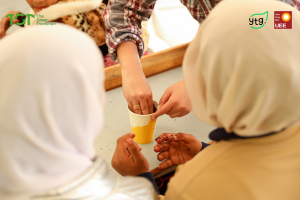
The Green Institutes phase focused on promoting environmental awareness and sustainability education in schools and universities.
This phase aimed to equip students with knowledge about sustainable practices, green careers, and climate action.
Key Activities
- Sustainability workshops and environmental education sessions
- Interactive learning activities and sustainability simulations
- Green job awareness and career exploration programs
- Hands-on sustainability experiments and projects
Impact
- 10+ schools and universities engaged
- 650+ students trained in sustainability awareness
- Multiple student-led sustainability initiatives proposed for their communities
This phase helped empower young people to become future sustainability leaders and advocates for environmental responsibility.
Phase 2: The Green Communities
Community Research and Local Sustainability Solutions
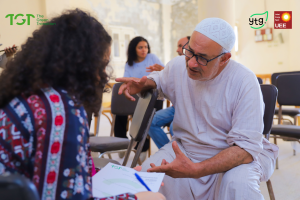
The Green Communities phase focused on conducting in-depth community research and stakeholder engagement to better understand local environmental and economic challenges.
Key Activities
- Stakeholder mapping across industries and community organizations
- Focus group discussions with community members and local leaders
- Research on sustainable agriculture, renewable energy adoption, and circular economy opportunities
Key Insights
- Water scarcity and inefficient irrigation systems impact agricultural productivity
- Economic diversification is required to support small and medium enterprises (SMEs)
- Women and youth require greater access to vocational training and entrepreneurship programs
Through this research, the project identified 19 key business opportunities and sustainability challenges that could be addressed through innovation and community collaboration.
Phase 3: The Green Futures
Supporting Green Startups and Sustainable Entrepreneurship
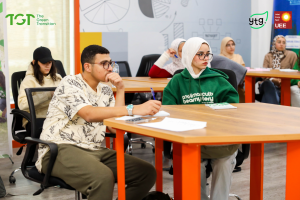
The Green Futures phase focused on building a pipeline of green entrepreneurs and sustainable startups capable of solving local environmental and economic challenges.
Program Components
- A 3-day green entrepreneurship bootcamp
- One-to-one mentorship sessions with industry experts
- A final startup pitching competition
Program Results
- 30+ startup teams applied
- 8 green startups selected and incubated
- 3 winning startups awarded funding totaling 55,000 EGP
The program helped transform innovative ideas into scalable green businesses that support sustainable economic development.
Strategic Marketing and Sustainability Awareness
To maximize visibility and engagement, the project implemented a comprehensive sustainability marketing and communication strategy.
Key efforts included:
- Development of a strong brand identity for The Green Transition project
- Multi-platform social media awareness campaigns
- A dedicated website landing page
- On-ground branding, events, and community outreach
- Professional photography, videography, and interviews with project leaders
These initiatives strengthened the project’s presence and helped position TGT as a leading sustainability initiative in Egypt.
Project Impact: Measurable Sustainability Outcomes
The Green Transition project delivered measurable results across education, entrepreneurship, and community development.
Key Impact Metrics
- 650+ students trained in sustainability education
- 10+ educational institutions engaged
- 20 home-based business initiatives supported
- 19 sustainability opportunities identified
- 8 green startups developed
- 3 startups awarded funding
The project successfully strengthened collaboration between local communities, educational institutions, industry leaders, and sustainability experts.
Key Takeaways: Building a Sustainable Future
The Green Transition project demonstrates that sustainable development requires an integrated approach that combines:
- Sustainability education and climate awareness
- Community research and stakeholder engagement
- Green entrepreneurship and innovation
- Strategic partnerships across industries and institutions
By empowering youth, supporting local businesses, and promoting renewable energy and sustainable practices, the project contributes to building a more resilient, environmentally responsible, and economically sustainable future for Egypt.