
Every institution operating in the sustainability space eventually reaches the same bottleneck. The policies exist. The mandates are written. The international commitments are signed. What is missing are the people inside the organization who can translate those commitments into decisions, projects, and outcomes. That gap — between institutional intention and institutional capability — is precisely what green skills development is designed to close.
This article offers a structured methodology for institutions in Egypt and across the MENA region that are ready to move beyond awareness and build the competency base their sustainability work actually requires. It is written for senior learning and development, HR, or sustainability leads inside government bodies, development agencies, and international organizations — practitioners who need a framework they can take back to their institution and adapt to their specific context.
Why Green Skills Are Now a Development Priority — Not Just a Training Trend
How the IPCC, ILO, and UNEP define green skills and why the definition matters
The term green skills has moved through several iterations since its emergence in the climate policy literature, and the definition used matters significantly when designing programs. The International Labor Organization defines green skills as the technical knowledge, values, and attitudes needed to develop and support a sustainable, resource-efficient society. The IPCC frames the same concept through the lens of climate literacy and adaptive capacity — the ability of individuals and systems to adjust to changing conditions. UNEP, particularly through its work on the Resource Efficient and Cleaner Production programme, approaches green skills from an industrial competency perspective, emphasizing the operational capabilities required to reduce resource consumption, manage emissions, and implement circular economy principles at a facility level.
For institutions designing capacity building programs, the convergence between these frameworks is more useful than their differences. All three treat green skills not as a category of specialist knowledge but as a cross-cutting competency layer — one that must be embedded across functions rather than siloed within a dedicated sustainability team. That framing has direct implications for how institutions structure their environmental capacity building efforts: the goal is not a more qualified sustainability officer but a more sustainability-capable institution.
The green skills gap in MENA — where the biggest deficits lie
Across Egypt and the wider MENA region, institutional green skills deficits tend to cluster in three areas. The first is technical fluency at the practitioner level: the ability to conduct energy audits, interpret environmental compliance data, apply life cycle thinking to procurement decisions, or design waste minimisation plans. This gap is particularly acute in industrial and infrastructure contexts where operational staff interact with sustainability outcomes daily but lack the language and tools to manage them systematically.
The second deficit is at the strategic level. Senior decision-makers in many MENA institutions understand sustainability as a reporting obligation rather than a planning input. The shift required is from compliance-mindset to integration-mindset — from asking what do we need to disclose to asking how does sustainability criteria change this decision. That shift requires deliberate investment in leadership-level sustainable development training that is relevant to the institutional context, not generic.
The third gap, often the most underestimated, is behavioral. Institutional sustainability programs fail not because they lack technical content but because they fail to shift the default assumptions and daily habits of the people who actually run the institution. Building a sustainability culture requires a different kind of SME sustainability capacity building than a technical upskilling programme — one that addresses values, incentives, and organizational norms alongside knowledge.
How green skills capacity building attracts international development funding
YTG’S work in Egypt provides useful examples of how these different layers of capacity building can be translated into practice. Since 2013, YTG has worked as a non-profit social enterprise and development consulting house in Egypt, focusing on hands-on non-formal education, consulting, entrepreneurship, and sustainability innovation. Its website describes its work as combining education, innovation, empowerment, authenticity, and quality, with a mission to support sustainable development through youth-led and locally developed solutions. (YTG)
This experience is relevant because institutional green skills development should not be limited to classroom-based training. It requires practical learning models that connect knowledge with implementation. YTG’S portfolio shows how sustainability education, entrepreneurship support, and project-based capacity building can be combined to strengthen both individuals and institutions.
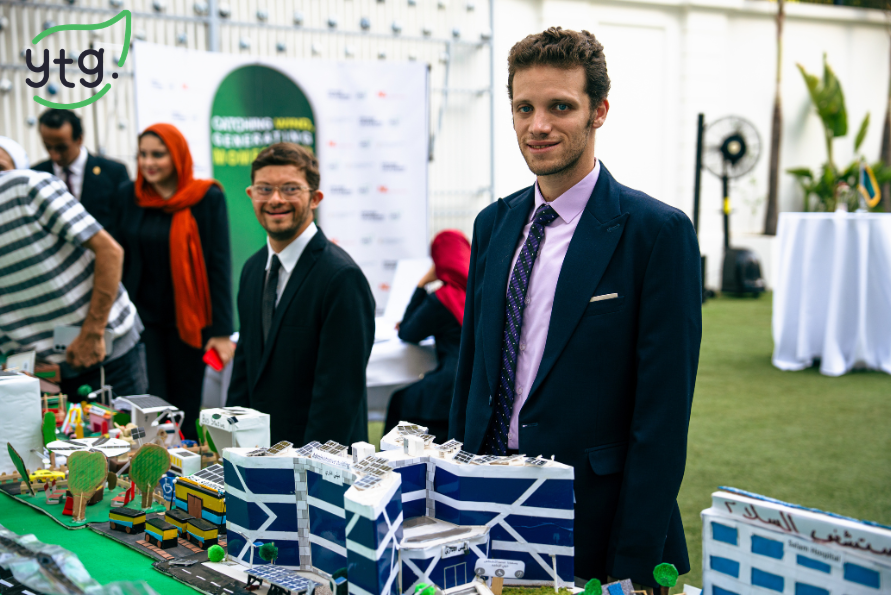
- One example is YTG’s involvement in Egypt’s National Initiative for Smart Green Projects. The initiative was launched to identify and promote smart green projects across Egypt’s governorates and to connect them with investment opportunities. It targets different categories, including large projects, medium enterprises, startups, women-led climate and sustainability projects, and non-profit community initiatives. (مركز معلومات مجلس الوزراء) YTG’S case study on the initiative highlights the importance of improving project quality, strengthening investment readiness, and building a knowledge-driven sustainability ecosystem. This is directly aligned with the institutional capacity challenge: many promising green ideas fail not because they lack relevance, but because they are not yet technically structured, financially credible, or implementation-ready.
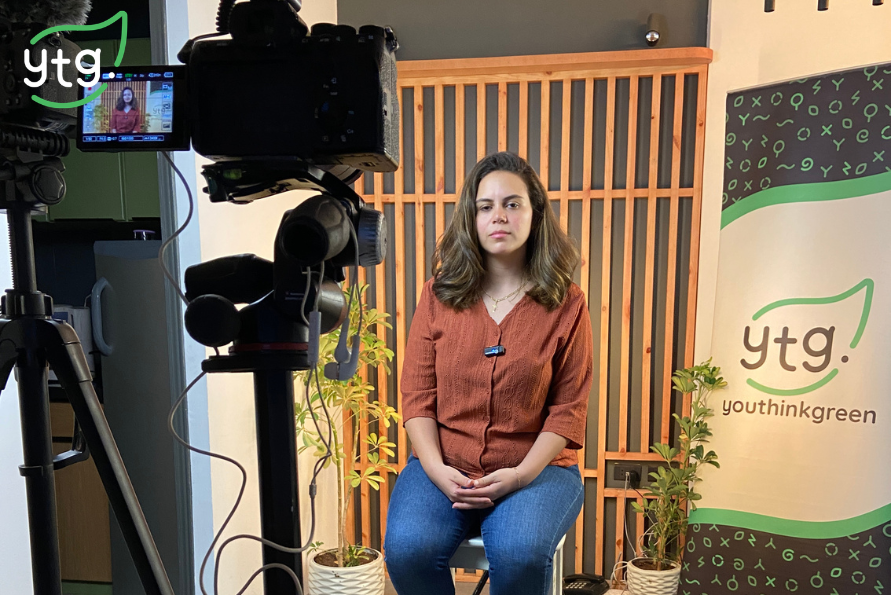
- A second example is YTG’s work on green skills bootcamps, including the Youth 4 Capacity programme. The programme reflects a key lesson for institutions: capacity building should combine technical learning with leadership, digital tools, and peer exchange. In practice, this means that green skills programmes should help participants understand sustainability concepts while also giving them the confidence and tools to apply those concepts in real organizational settings. YTG’S own website positions its services around education and awareness, entrepreneurship and business innovation support, eco-friendly events, and sustainability consultation for governmental and development sectors. (YTG)
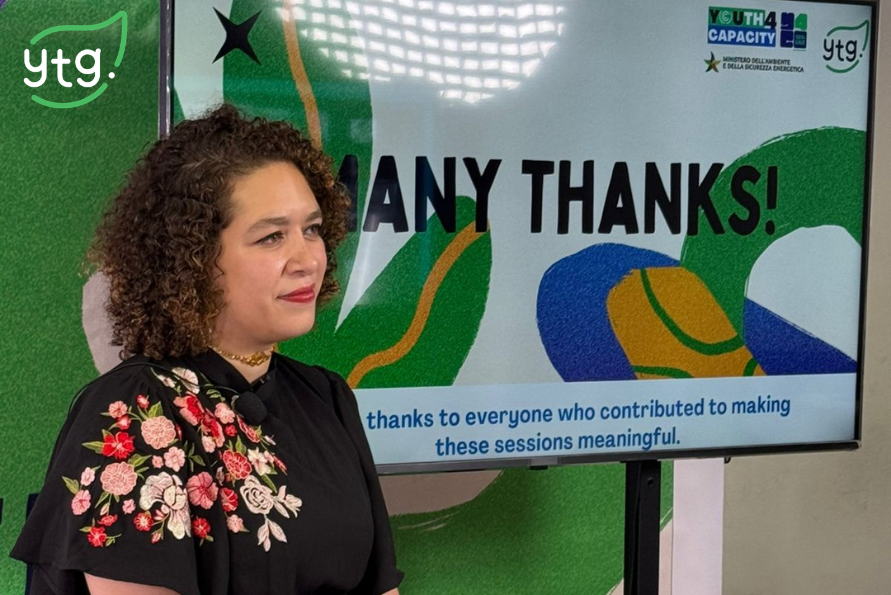
- A third example is Climate Launchpad, where YTG supported early-stage climate entrepreneurs in strengthening business models, value propositions, and investor readiness. This matters for institutional green skills because entrepreneurship and innovation are increasingly part of the sustainability transition. Public institutions, development partners, and private companies all need staff who can identify scalable solutions, engage startups, design innovation challenges, and evaluate clean technology opportunities. Green skills are therefore not only about compliance; they are also about opportunity creation.
The Green Skills Framework — What Competencies Institutions Need to Build
Technical green skills — energy, water, waste, and emissions management
Technical green skills are the operational foundation of any institutional sustainability programme. They include the ability to measure and track energy consumption at a facility or project level, identify water efficiency opportunities through process analysis, design or oversee waste segregation and material recovery systems, and calculate and report greenhouse gas emissions using recognised methodologies such as the GHG Protocol or ISO 14064. For institutions in Egypt operating across infrastructure, industrial, or agricultural contexts, these competencies often need to be developed at two levels simultaneously: the specialist practitioners who design and implement technical interventions, and the operational managers who oversee them day to day.
The practical implication is that technical green skills training cannot be delivered as a single workshop. It requires a structured curriculum with graduated depth — foundation-level modules that build shared vocabulary across functions, followed by applied technical programs that give practitioners the tools to do the work. Effective environmental capacity building at the technical level is almost always site-specific, drawing on actual facility data, actual operational constraints, and actual regulatory requirements rather than generic case studies.
Strategic green skills — sustainability integration into planning and procurement
Strategic green skills address the intersection between sustainability and institutional decision-making. They include the ability to integrate sustainability criteria into project appraisal and procurement processes, to design monitoring and evaluation frameworks that track environmental and social outcomes alongside conventional project metrics, and to engage with international sustainability frameworks — GRI, SASB, TCFD, and the World Bank Environmental and Social Framework — in ways that inform rather than merely satisfy reporting obligations.
For MENA government bodies and development agencies, strategic green skills are particularly relevant to public investment planning and donor-funded project design. The capacity to write a project concept note that meaningfully addresses environmental risk, or to design a procurement framework that rewards sustainability performance, is not a technical skill — it is a strategic one. Building this competency layer requires programs that work with real institutional mandates and real project pipelines, not theoretical scenarios.
Behavioral green skills — sustainability culture, awareness, and leadership
Behavioral green skills are the least structured category but arguably the most determinative of long-term institutional outcomes. They include environmental awareness and literacy at a general staff level, the capacity of mid-level managers to embed sustainability thinking into team decisions without requiring specialist input on every occasion, and the leadership capabilities required to champion institutional transformation against organisational inertia. Climate change education programs designed to build this competency layer must address not just knowledge but motivation — why sustainability matters to the institution’s core mission, not just to its compliance calendar.
Institutions that succeed at building a genuine sustainability culture typically share one characteristic: they invest in visible, credible senior leadership advocacy alongside staff-level education programs. The behavioural shift required cannot be mandated from policy alone. It requires leaders who model the values they are asking their institutions to adopt.
Mapping Green Skills Needs Across Your Institution
How to conduct a green skills needs assessment
A green skills needs assessment begins with scope definition: which functions, departments, and seniority levels are included, and which sustainability outcomes the institution is working toward. Without that anchor, the assessment risks producing a general wish-list rather than a targeted capability-building agenda. The most useful needs assessments are tied directly to an institution’s strategic sustainability commitments — whether those are NDC-related targets, ESG disclosure obligations, environmental compliance requirements, or donor-funded project deliverables.
The assessment methodology typically combines three data streams. The first is documentary review: examining existing job descriptions, performance frameworks, and organisational policies to identify where sustainability competencies are currently expected versus where they are absent. The second is structured interviews or focus groups with functional leads to surface the practical capability gaps that affect day-to-day work. The third is benchmarking against relevant sector frameworks — what competencies do comparable institutions in comparable contexts demonstrate, and where does this institution fall short.
Competency mapping tools for sustainability roles
Several international frameworks provide useful starting points for competency mapping. The UNEP Inquiry into Sustainable Finance has produced competency maps for financial sector roles. The ILO’s Green Jobs Programme offers occupational profiles for a range of green economy functions. For institutions operating in the Egyptian industrial context, the competency frameworks developed through ENCPC and UNIDO’s RECP programme provide directly applicable role-level guidance for production, environmental management, and energy functions. These tools should be adapted to institutional context rather than adopted wholesale — the value is in the structure they provide, not in the specifics of any single profile.
Prioritizing skills development across departments and seniority levels
Not all green skills gaps carry equal urgency. Prioritizations should follow two criteria: the impact of the gap on institutional sustainability outcomes, and the feasibility of closing it within a realistic development timeframe. Gaps in technical competencies held by a small number of specialist practitioners may have high impact but require sustained investment over multiple years. Gaps in general sustainability literacy across a large workforce can often be addressed more rapidly through well-designed awareness programs. The prioritization matrix should be revisited annually as institutional sustainability ambitions evolve and the external landscape changes.
A Phased Approach to Institutional Green Skills Development
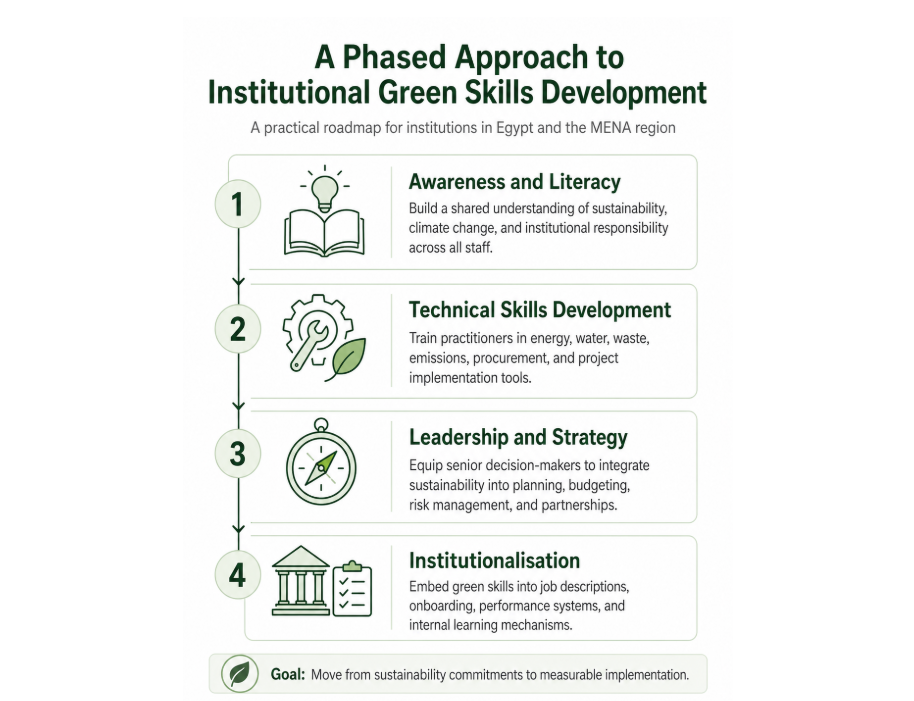
For institutions seeking to build these capabilities, a phased approach is recommended.
- The first phase should focus on awareness and literacy. All staff need a shared understanding of sustainability, climate change, resource efficiency, and the institution’s own environmental responsibilities. The objective is not to turn every employee into a specialist, but to ensure that sustainability can be understood and discussed across departments.
- The second phase should target technical practitioners. These may include environmental officers, engineers, procurement teams, project managers, monitoring and evaluation staff, and operations teams. Training at this level should be applied, using real data, real projects, and relevant standards rather than generic examples.
- The third phase should focus on leadership and strategy. Senior decision-makers need tailored programmes that show how sustainability changes institutional priorities, investment choices, risk management, and stakeholder expectations. This level of training should be concise, practical, and linked to the institution’s mandate.
- The fourth phase is institutionalization. Green skills should be embedded into job descriptions, onboarding systems, staff development plans, performance frameworks, and internal knowledge-sharing mechanisms. Without this step, training remains an isolated activity rather than a durable institutional capability.
For MENA institutions, the opportunity is clear. Green skills development can improve internal performance, strengthen access to climate and development finance, support national sustainability strategies, and prepare staff for the future of work. It can also connect institutions with youth, entrepreneurs, and local innovators who are already developing solutions for energy, water, waste, mobility, agriculture, and circular economy challenges.
The transition to sustainable development will not be delivered by policies alone. It will be delivered by people who know how to implement them. Building green skills is therefore not an optional add-on to sustainability work. It is the operational foundation that allows institutions to move from commitment to capability, and from capability to measurable impact.
Aligning Green Skills Programs with International Frameworks
SDG 4 (Quality Education) and SDG 17 (Partnerships) — the skills development mandate
SDG 4 explicitly includes sustainability education within its scope, with Target 4.7 calling for all learners to acquire the knowledge and skills needed to promote sustainable development. SDG 17, which addresses the means of implementation across the entire 2030 Agenda, identifies capacity building as a core mechanism for enabling developing countries to meet their sustainability commitments. For institutions designing green skills programs in Egypt and the MENA region, grounding program rationale in these targets provides a recognized international legitimacy that matters when seeking partnerships, co-financing, or technical assistance from multilateral bodies.
How green skills programs support GIZ, UNDP, and IFC project requirements
GIZ, UNDP, and IFC each approach institutional capacity building with distinct frameworks, but they share common expectations when evaluating whether a partner institution has the capability to deliver. GIZ’s capacity development methodology prioritises systemic change — it looks for evidence that training investment will translate into lasting institutional behaviour rather than individual skill acquisition. UNDP’s approach, particularly within its Country Programme cycles, emphasises alignment between capacity building activities and national sustainability strategies such as NDCs and national environmental action plans. IFC’s requirements, particularly under its Performance Standards, focus on the institutional capacity to manage environmental and social risks systematically — a capability that cannot be demonstrated without documented training and competency management systems.
For institutions preparing proposals or programme designs for these funders, the practical implication is that a green skills development plan should address three questions explicitly: what competencies are being built, how their development will be measured, and how the programme connects to the institution’s broader sustainability mandate. A well-constructed institutional sustainability training framework that answers these questions positions an organisation as a credible and capable partner — not merely an interested one.
Certification pathways recognized across MENA and internationally
Internationally recognised certification provides individual practitioners with portable credentials that signal competency beyond the boundaries of a single institution or country context. Relevant pathways for MENA-based practitioners include the GRI Certified Sustainability Professional program, IEMA’s Associate Membership and Certificate in Environmental Management, the ISO 14001 Lead Auditor qualification for environmental management system specialists, and the CDP-aligned disclosure training programs increasingly available through regional training providers. For institutions building internal capability, supporting staff through recognised certification programmes also signals to external stakeholders — including funders and regulators — that the institution’s sustainability competency claims are externally validated rather than self-assessed.
The question of which certifications to priorities should be driven by the institution’s specific sustainability context. An industrial operator managing environmental compliance under Egyptian law will need different credentials than a development agency designing climate adaptation programmes. The most effective approach is to map certification pathways against the competency needs identified in the assessment phase, then invest in credentials that align with the institution’s near-term sustainability priorities and the expectations of its primary funders and regulatory stakeholders.